
Researchers Found: Plastic Cutting Boards Can Shed Millions of Tiny Particles Into Food... This Simple Kitchen Swap You Need to Make
 by Mike James Charlotte, NC | Updated Aug 17, 2026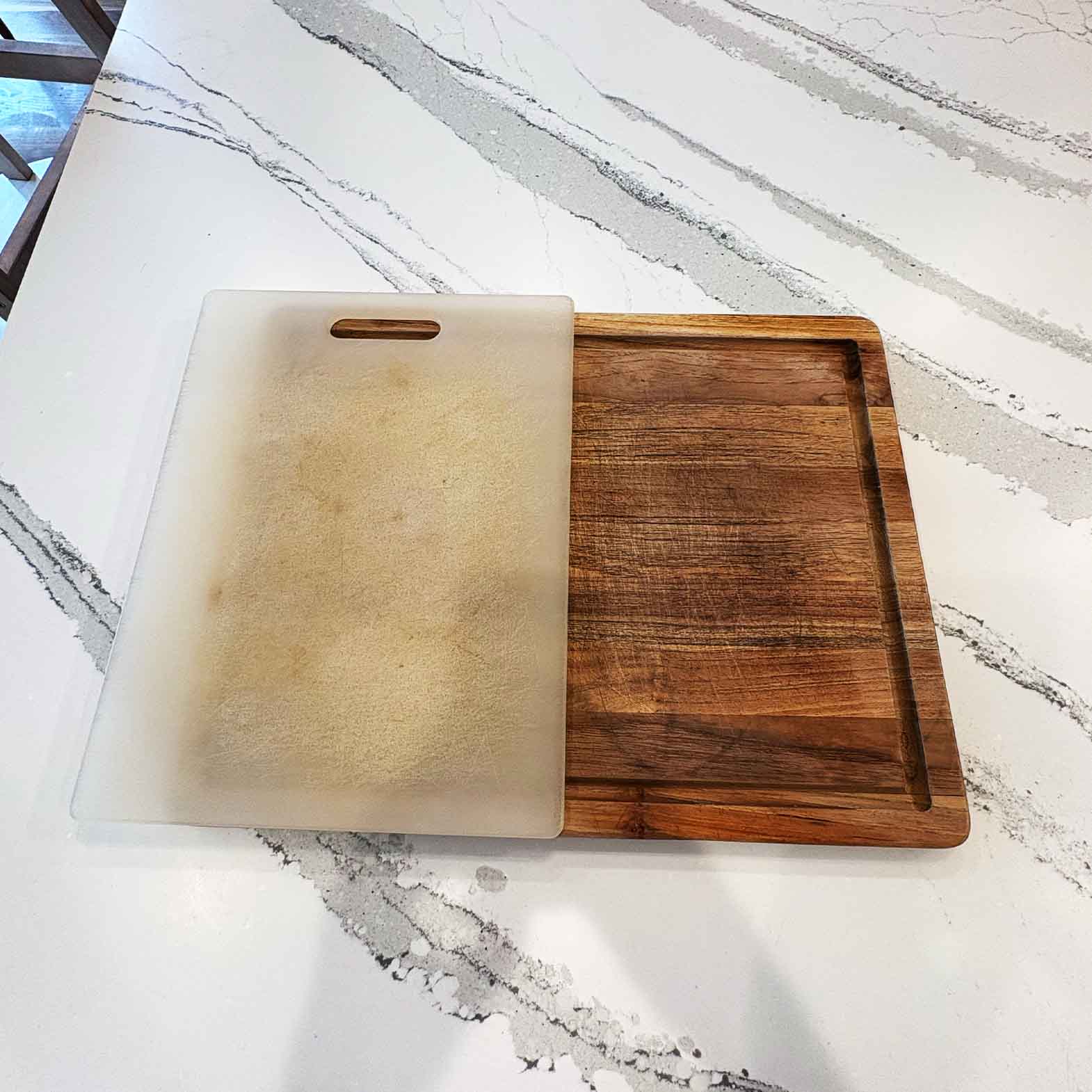
Most people trying to clean up their diet focus on the food itself: better meat, fresher produce and fewer processed ingredients.
But researchers have identified another source of exposure sitting underneath the food: the cutting board.
A peer-reviewed study published in Environmental Science & Technology found that chopping on polyethylene and polypropylene cutting boards releases microplastic particles from the boards themselves.1
Based on the researchers' experiments and estimates of typical cutting-board use, a polyethylene board could generate 14.5 million to 71.9 million particles per person each year. Their estimate for polypropylene reached 79.4 million particles annually.1
Researchers have also found polyethylene microplastics in meat and fish prepared on plastic cutting boards.2,3
The explanation is straightforward. A knife repeatedly cuts, scrapes and scores the surface. Over time, some of that surface material comes off.
For anyone trying to reduce unnecessary plastic contact with food, that creates an obvious place to start.
One new cutting board takes a completely different approach.
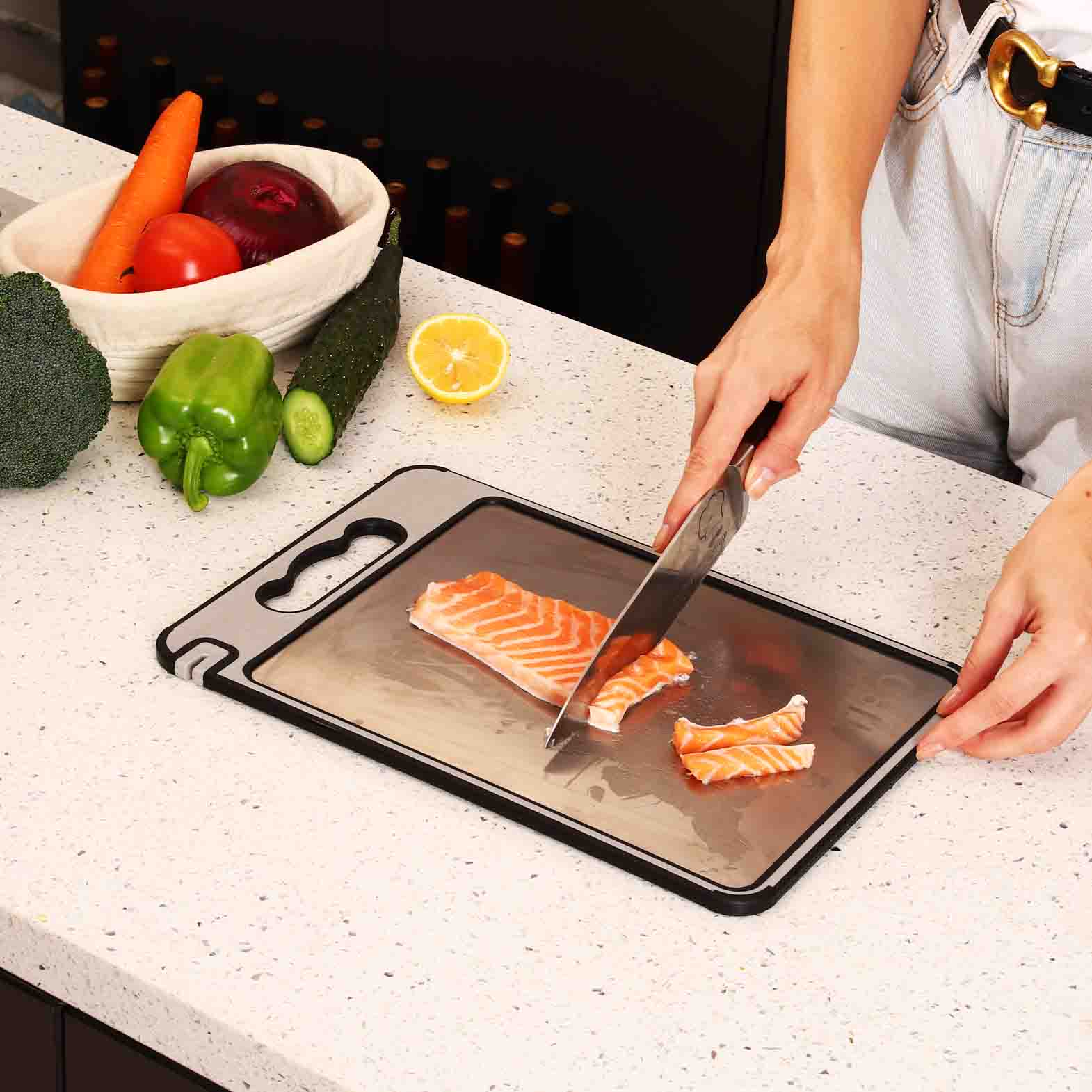
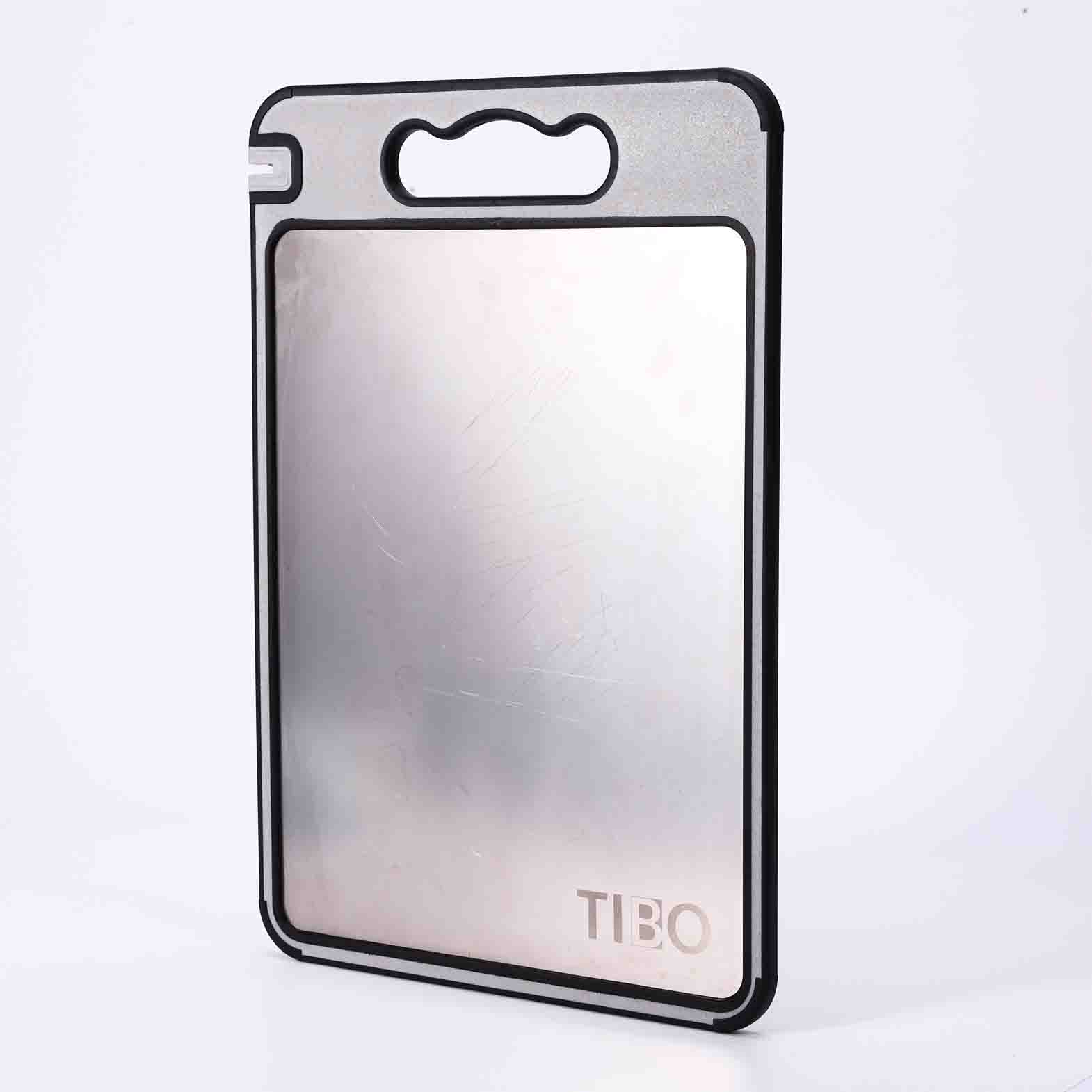
It's called TIBO, and its primary cutting surface is made from titanium.
The cutting-board problem researchers measured
Polyethylene and polypropylene are among the most common materials used to make plastic cutting boards.
They are inexpensive, lightweight and easy to clean.
They also wear.
The 2023 Environmental Science & Technology study measured the microplastics generated while chopping on both types of boards.1
The researchers calculated potential annual exposure reaching tens of millions of particles under their modeled use conditions.
A separate study examining commercially prepared chicken and fish detected polyethylene microplastics transferred during cutting-board preparation.2
Another study focusing on meat reached a similar conclusion: plastic cutting boards can be a direct source of microplastic contamination in food.3
Those studies give consumers a reason to reconsider a surface that comes into contact with food almost every day.
Why you don't want microplastics in your body
Microplastics have now been detected in human blood, lungs, placenta, breast milk and arterial plaque.6,7 The health evidence is becoming increasingly concerning. A 2024 New England Journal of Medicine study found that patients with micro- and nanoplastics detected in carotid artery plaque had a 4.53-times higher adjusted risk of heart attack, stroke or death during follow-up than patients whose plaque did not contain detectable plastic particles.6
A 2024 systematic review of the scientific evidence concluded that microplastic exposure is suspected to harm human reproductive, digestive and respiratory health, with the evidence also suggesting links to colon and lung cancer.7
TIBO replaces the plastic cutting surface with titanium
TIBO gives you a Grade 2 titanium surface designed for preparing meat, poultry and seafood.11
Titanium isn't polyethylene or polypropylene.
It isn't a plastic polymer.
That means chopping on the titanium side removes the polyethylene or polypropylene cutting surface that researchers identified as a source of microplastics.
The difference becomes especially relevant with foods that require repeated trimming and chopping, such as chicken breasts, steak and fish.
Instead of driving a knife into plastic hundreds of times during meal preparation, the blade contacts titanium.
Why Grade 2 titanium stands out
TIBO identifies its metal surface as Grade 2 titanium.11
Grade 2 titanium, technically UNS R50400, is one of the commercially pure titanium grades included in ASTM F67, the standard covering unalloyed titanium used in surgical implant applications.8
The FDA recognizes ASTM F67 as a consensus standard for unalloyed titanium used in surgical implant applications.9
That does not mean a cutting board is a medical device. It demonstrates how established Grade 2 titanium is as an engineering material.
Titanium is also highly resistant to corrosion because its surface naturally develops a protective oxide layer.10
For a kitchen surface that regularly encounters water, food acids and meat juices, corrosion resistance is a practical advantage.
5 reasons TIBO makes sense in the kitchen
1. The titanium side removes a documented source of plastic particles
Researchers have demonstrated that chopping on polyethylene and polypropylene cutting boards can release microplastics.1
Other researchers have detected polyethylene cutting-board particles in prepared food.2,3
TIBO's titanium surface removes those plastic polymers from underneath the knife.
2. Raw meat stays on a non-absorbent metal surface
Preparing poultry, steak and seafood often leaves behind moisture, fats and juices.
Titanium doesn't require a moisture barrier to prevent those liquids from soaking into the metal.
The surface can simply be cleaned after use.
That makes titanium particularly appealing for raw-protein preparation.
3. No monthly mineral-oil routine
Wood is the traditional alternative to plastic, but quality wooden cutting boards require substantially more care.
John Boos, one of America's best-known butcher-block manufacturers, recommends oiling its wooden cutting boards at least once per month, with more frequent oiling when boards are washed frequently.12
Its maintenance instructions also recommend allowing oil to penetrate overnight, using board cream for additional moisture protection, drying wooden boards thoroughly and keeping them out of the dishwasher.12
TIBO's titanium surface requires no mineral oil, board cream, waxing, sanding or moisture-barrier maintenance.
You wash the surface and put it away.
4. Titanium avoids the porosity issue that comes with wood
Wood is a porous natural material.
Research examining cutting-board cross-contamination has shown that liquids carrying bacteria can enter the structure of wooden cutting boards.4
That does not mean properly maintained wooden boards cannot be used safely. It does mean cleaning, drying and surface maintenance matter.
John Boos specifically warns that water, blood and brine can penetrate wood, causing it to soften and expand if the board isn't properly cared for.12
Titanium doesn't absorb those liquids into its structure.
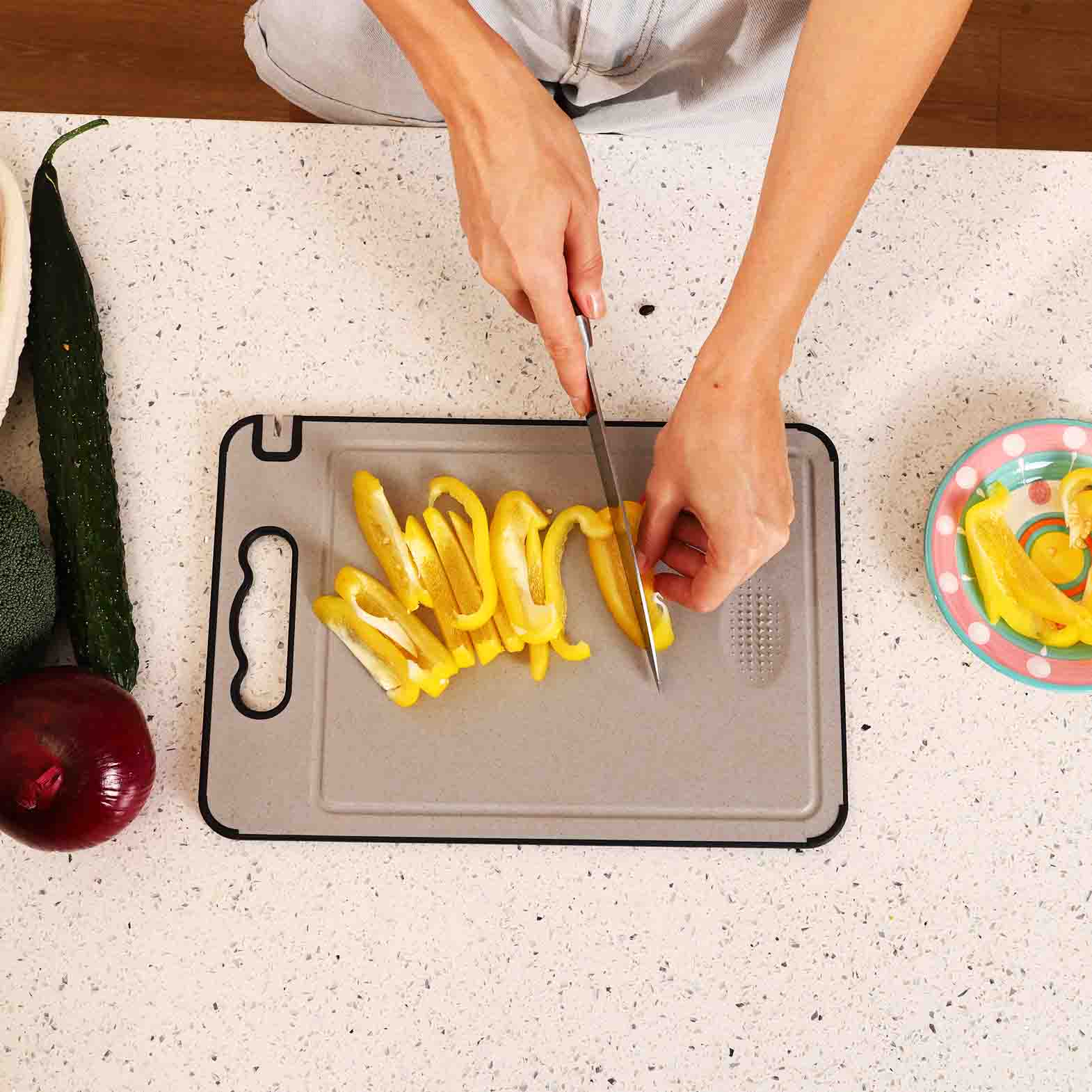
5. TIBO combines several prep tools into one board
TIBO's current design includes more than the titanium surface.
According to the manufacturer, it also incorporates:
- A ceramic knife sharpener
- A garlic and ginger grater
- A juice groove
- A non-slip surround
- A reversible food-prep design11
The result is a cutting board designed to replace several things that normally occupy space around the prep area.
Plastic is convenient, but the surface wears away
The knife marks visible on an old plastic cutting board show that the surface changes with use.
The research now gives us a much closer look at that wear.
Under controlled chopping conditions, researchers measured millions of polyethylene and polypropylene particles released from cutting boards.1
Researchers studying actual food preparation have also identified cutting-board-derived polyethylene in meat and fish.2,3
Replacing that plastic surface is one of the simplest ways to reduce an avoidable source of plastic contact during food preparation.
TIBO accomplishes that without requiring the regular maintenance associated with a traditional wooden butcher block.
Wood requires ongoing care
A premium wooden cutting board can last for years when properly maintained.
That maintenance is part of the ownership.
John Boos recommends regular oiling to keep wood from drying out and to maintain its moisture barrier.12
The company's instructions call for oiling at least monthly, allowing the oil to penetrate, thoroughly drying the board after washing and never putting it in the dishwasher.12
Scratches may need to be sanded.
Frequent washing can mean more frequent oiling.
Moisture, blood and brine must be kept from sitting on the surface for extended periods.12
TIBO removes that routine from the equation.
Its titanium surface does not need to be fed mineral oil to keep it from drying, splitting or absorbing moisture.
TIBO gives raw-protein prep its own surface
Food-safety agencies put considerable emphasis on keeping raw meat away from foods that will be eaten without further cooking.
USDA recommends using separate cutting boards for raw meat, poultry and seafood versus produce and other ready-to-eat foods when possible.5
TIBO's reversible design makes it easy to designate its titanium side for raw proteins while reserving the reverse side for other preparation.11
The physical separation makes the routine easy to remember.
Use the titanium side for meat.
Clean the board thoroughly.
Flip it when preparing foods designated for the other side.
Titanium gives you a different third option
For years, most households chose between two basic categories.
Plastic boards are inexpensive and easy to maintain, but research now shows that chopping can release polyethylene and polypropylene microplastics.1,2,3
Wooden boards eliminate the plastic cutting surface, but they are porous and require ongoing cleaning, drying, oiling and moisture management.4,12
TIBO's titanium surface removes the plastic polymer from underneath the knife without introducing the oiling and moisture-maintenance routine of wood.
That combination is what makes the idea compelling.
One kitchen surface you can easily change
Microplastics come from many sources, and eliminating every exposure isn't realistic.
A cutting board is different because replacing it requires almost no lifestyle change.
You still buy the same groceries.
You still prepare dinner the same way.
You still use the same knives.
You simply change the material underneath your food.
Researchers have already shown that plastic cutting boards can shed microplastics during chopping.1
TIBO replaces that plastic cutting surface with titanium.
For anyone trying to reduce unnecessary plastic in the kitchen, it's a remarkably simple swap.
You can't control every source of plastic in modern life.
Your cutting board is one you can control.
CHECK TODAY'S TIBO AVAILABILITY »
-
➤ Select your state to check today's TIBO availability:

Alabama
Alaska
Arizona
Arkansas
California
Colorado
Conn.
Delaware
Florida
Georgia
Hawaii
Idaho
Illinois
Indiana
Iowa
Kansas
Kentucky
Louisiana
Maine
Maryland
Mass.
Michigan
Minnesota
Mississippi
Missouri
Montana
Nebraska
Nevada
NH
NJ
NM
New York
NC
N. Dakota
Ohio
Oklahoma
Oregon
Penn.
RI
SC
S. Dakota
Tennessee
Texas
Utah
Vermont
Virginia
Washington
DC
WV
Wisconsin
Wyoming